Skip to content
How it works

From two fields to a candidate on the phone.

The whole journey, screen by screen. Nothing is hidden behind a sales meeting, and nothing is paid before launch.

The process

Seven screens, and you don't write a thing.

No free-text fields anywhere. You choose from what I suggest, and I build the rest.

01

The role and local area

Two fields, nothing else. A role from a list, the area by town. No account, no card, no meeting.

If your role isn't on the list, tell me: it's a question of data, not principle.

02

The estimate

I start with public data for your area — prevailing salaries, hiring pressure and labour pool size — and tell you what a budget can deliver. Never a national average.

Always as a range, with two service levels, never a single figure. A neat promise would sell better and be less honest.

03

The role

Contract, hours, salary and benefits — meal allowance, vehicle, bonuses. Boxes to tick, not a blank page. That's the difference between an ad that speaks to the candidate and one that talks about you.

04

Your questions

What would make you end the call: driving licence, availability, experience on the machine, acceptable commute. You choose them from a list made for the role.

Depending on your plan, I ask the candidate before you call — or you ask them yourself on the phone.

05

The ad

I write and design it for that role and that area: recruiting a butcher in Limoges calls for a different message than recruiting a mechanic in Paris. Your logo, your colours.

You approve it before it goes live. It's created before you pay anything.

06

The launch

It's the only payment step in the process, and what you pay for is the advertising. You set the amount, see it line by line, and stop it whenever you want.

Unspent credit does not expire and funds the next campaign.

07

Applications

They arrive in your dashboard as they come in, with a button to call. Your whole team has access, with no extra charge per user. Export to CSV and XLSX, and download CVs in ZIP files.

When the role is filled, click “role filled” and the campaign stops.

What I don't do

I stop just before the decision.

It's a design boundary, not a missing step.

I don't conduct interviews.

I ask closed-ended questions, follow up at most twice with prewritten messages, and only about a criterion left unanswered. I fill in a checklist, that's all.

I don't assess anyone.

No scores, rankings or opinions about people. What you see are factual answers to your own questions.

I don't decide.

Who you call back, who you meet, who you hire: that's still you. The interview is where you judge, and it's the one part I leave entirely to you.

The showcase

The same template, as many roles as you need.

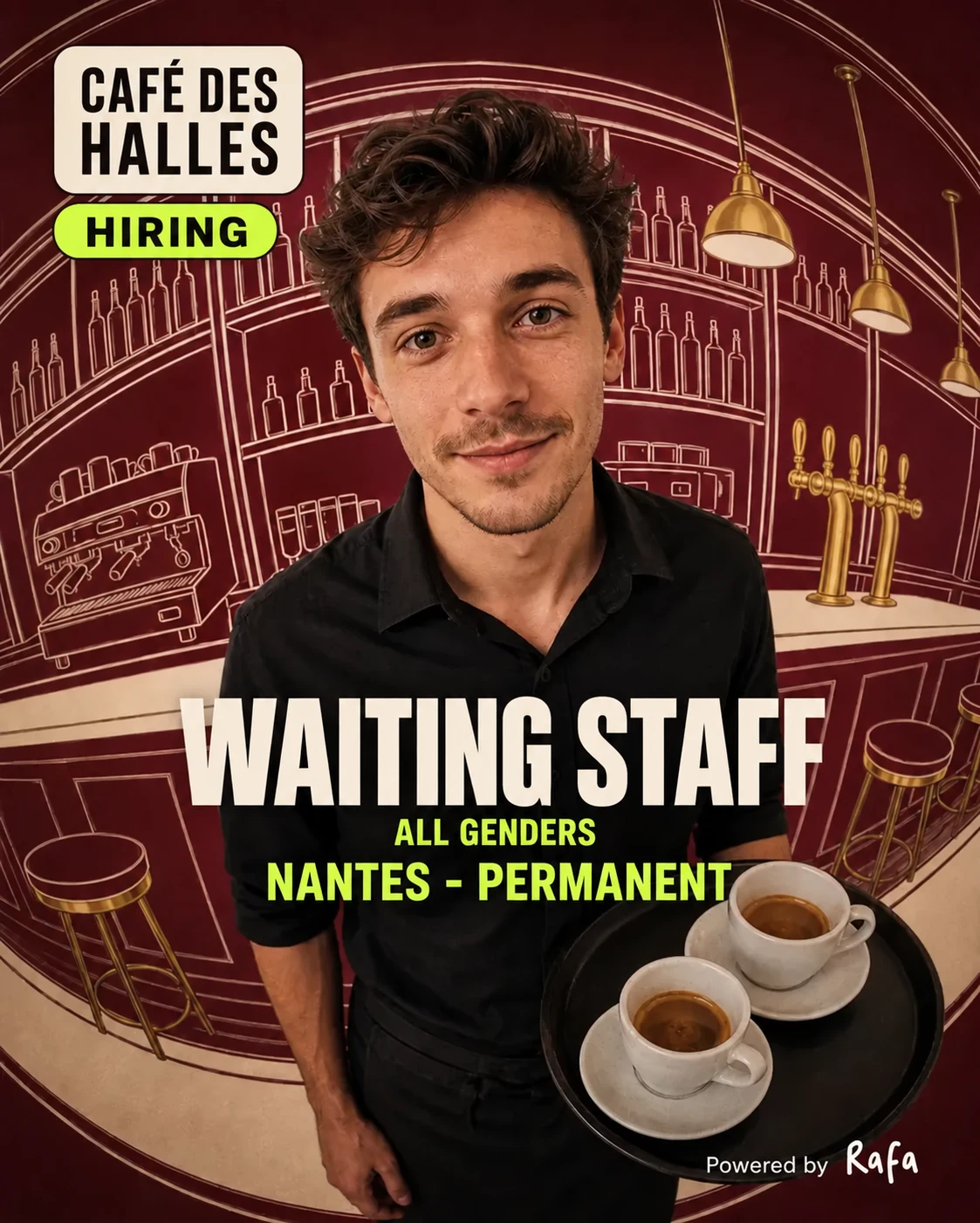
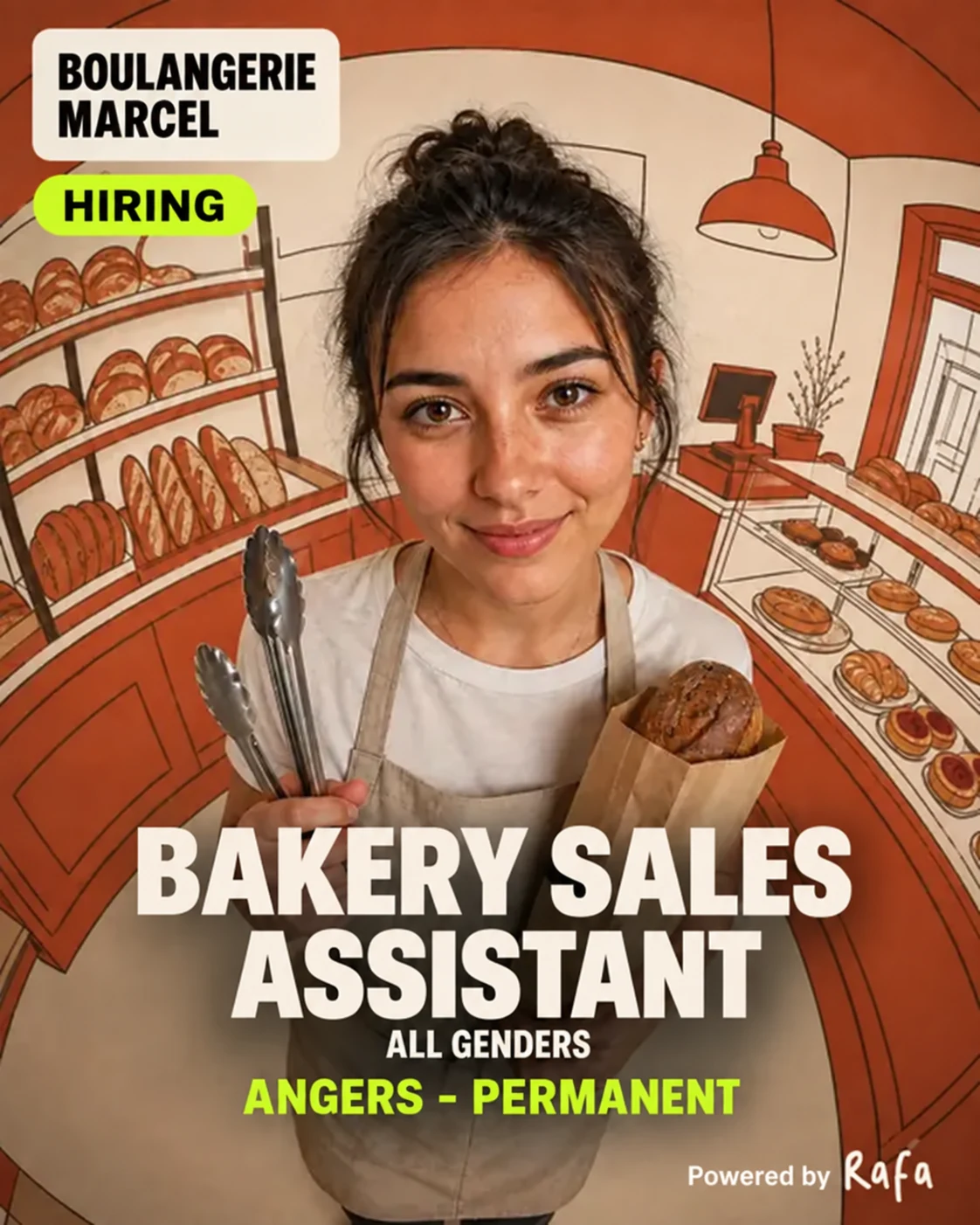
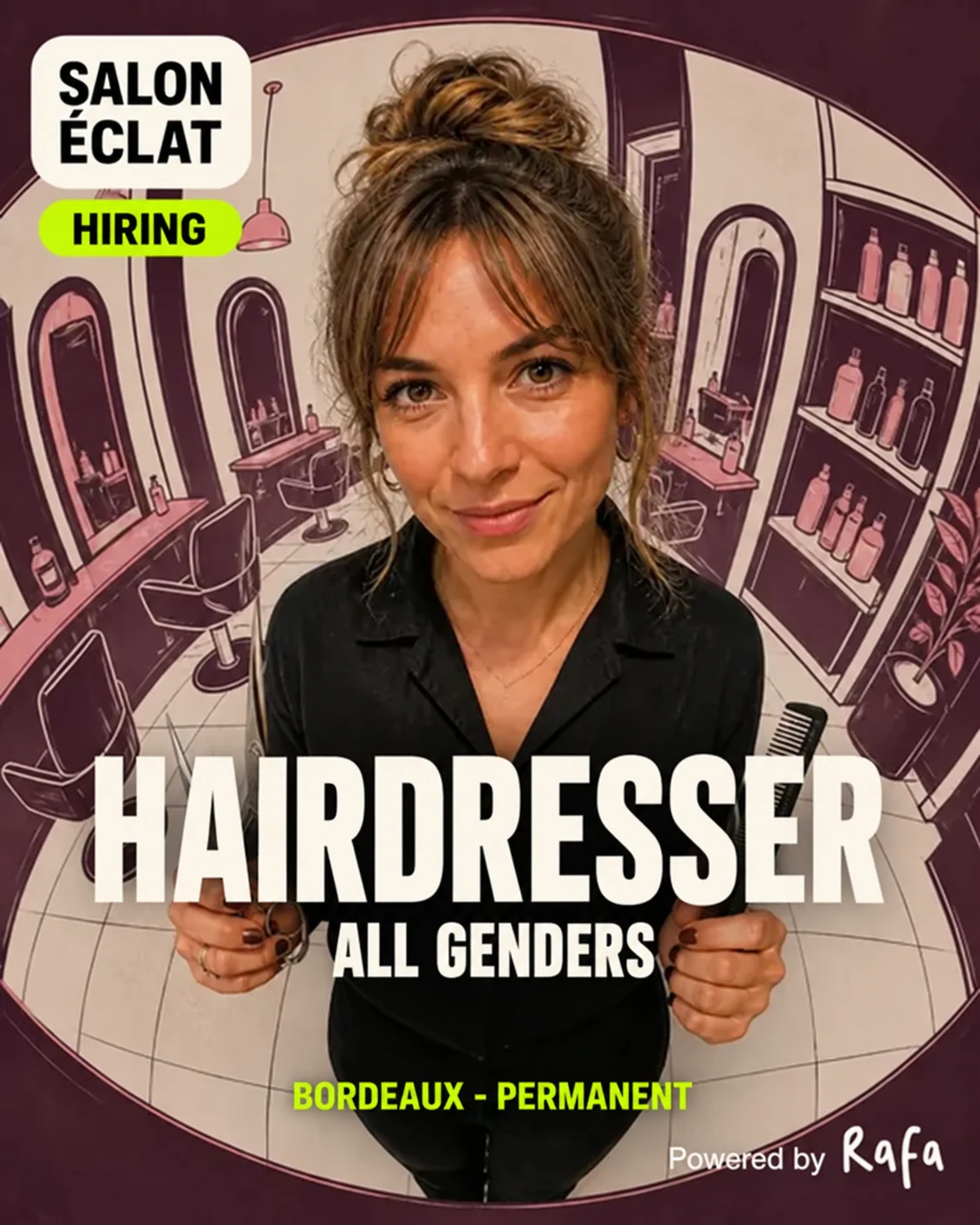
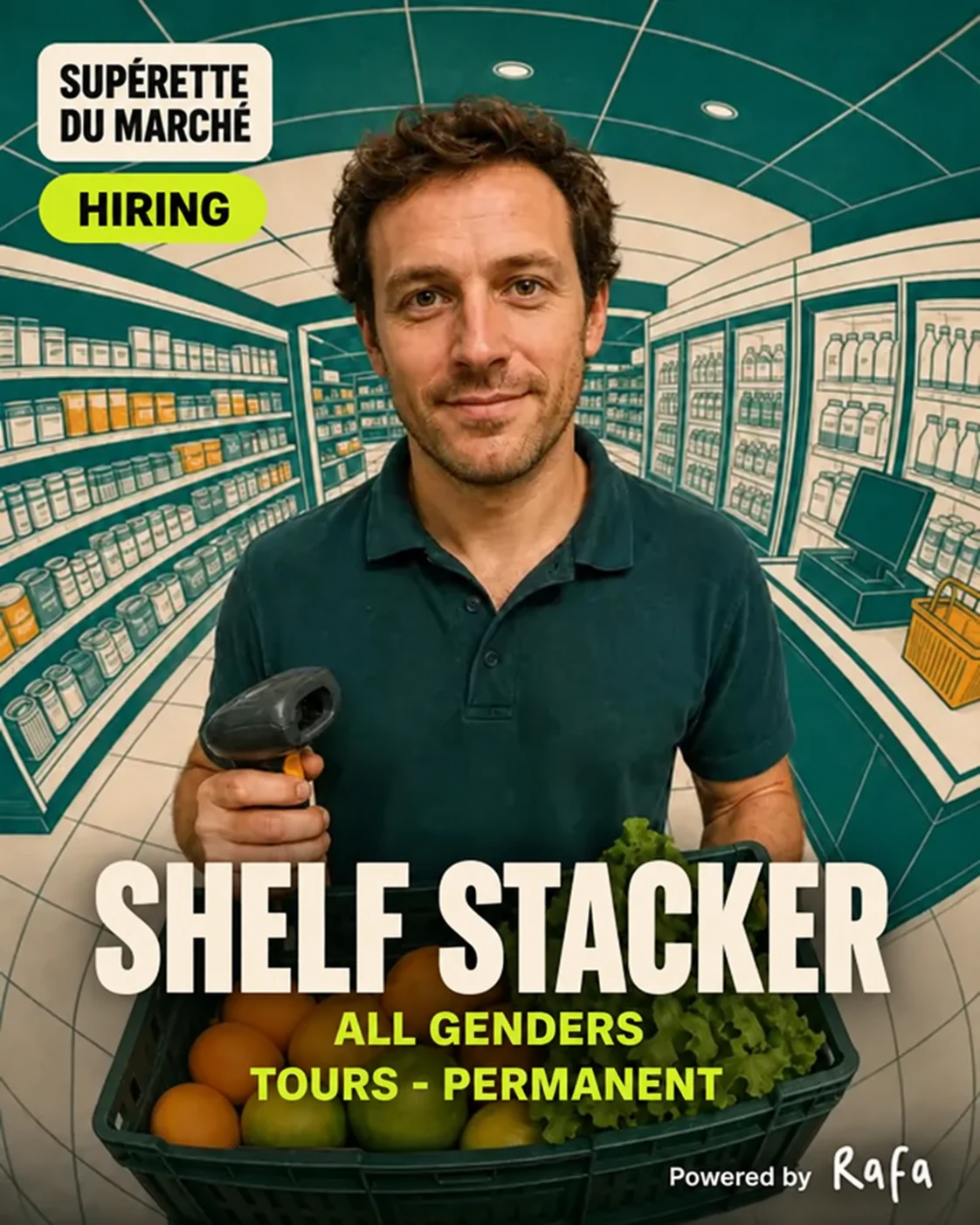
Every ad keeps the hiring company's colours. What never changes is the approach: the role in large type, the town, the contract — and two fields to reply, without leaving the feed.

Waiter / Waitress ad, Café des Halles · Nantes
Café des Halles · NantesWaiter / Waitress
Bakery sales assistant ad, Boulangerie Marcel · Angers
Boulangerie Marcel · AngersBakery sales assistant
Hairdresser ad, Salon Éclat · Bordeaux
Salon Éclat · BordeauxHairdresser
Shelf stacker ad, Supérette du Marché · Tours
Supérette du Marché · ToursShelf stacker
Microtechnology operator ad, Atelier Franche-Comté · Besançon
Atelier Franche-Comté · BesançonMicrotechnology operator
Vehicle mechanic ad, Garage Vermeil · Rennes
Garage Vermeil · RennesCar mechanic
Butcher ad, Boucherie du Cours · Aubagne
Boucherie du Cours · AubagneButcher

Seven examples from roles already available. Yours will be written and designed the same way.

What comes next

The second launch takes one minute.

The first journey builds a pack — “recruit a mechanic”, with its questions, ad and local area. The second time, you click on it.